Federal Lgbt Protection Art Federal Lgbt Protection Art Trump
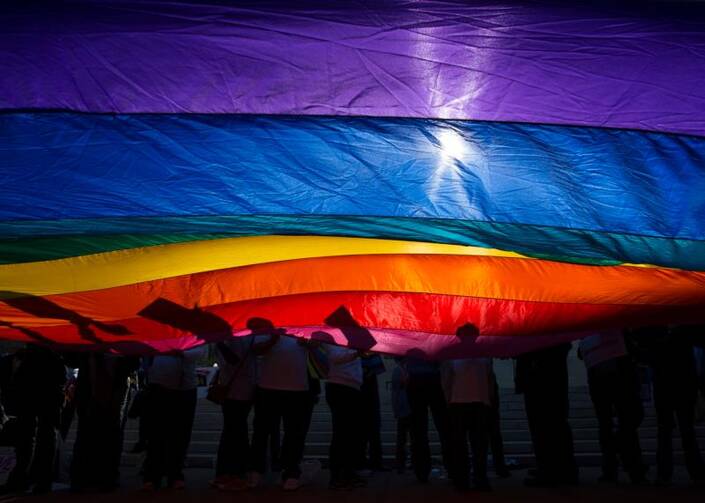 In this 2015 file photo, L.G.B.T. supporters wave a flag outside the U.S. Supreme Court in Washington. The court ruled June 15, 2020, that federal anti-discrimination laws protect gay and transgender employees from discrimination. (CNS photograph/Tyler Orsburn)
WASHINGTON (CNS) -- In a 6-3 vote June 15, the Supreme Court said LGBT people are protected from job discrimination by Championship 7 of the Civil Rights Act of 1964.
"An employer who fires an individual for being homosexual or transgender fires that person for traits or deportment information technology would not have questioned in members of a dissimilar sexual practice," said Justice Neil Gorsuch writing the stance in the example argued at the start of the court's term concluding Oct.
He pointed out that when Congress enacted Title VII, it might not take expected "this particular event." But he too said Congress probable didn't encounter many interpretations of the federal constabulary coming, including its prohibition against discrimination on the ground of maternity or its ban on the sexual harassment of male employees.
"But the written word is the law, and all persons are entitled to its benefit," Gorsuch wrote.
Dissenting votes were from Justices Samuel Alito, Clarence Thomas and Brett Kavanaugh.
The decision was for 2 consolidated cases about fired gay employees and a separate instance apropos a fired transgender worker who had sued for employment discrimination afterwards being fired.
At issue in this case is the wording in the Civil Rights Act, which prevents employment discrimination based on race, religion, national origin and sex. The court had to determine if discrimination that was not allowed based on sex applied to sexual orientation as well equally gender identity.
Federal appeals courts have been divided on this application of the law for the past three years since the U.S. Courtroom of Appeals for the 7th Circuit became the first to rule that homosexuals should exist protected from task bigotry by the civil rights law.
"Sex activity ways whether y'all're male or female, not whether you lot're gay or direct," argued Solicitor General Noel Francisco for the Trump administration on the side of the employers during oral arguments.
But Justice Sonia Sotomayor said the outcome of people beingness fired for their sexual identity had to be examined, noting: "Nosotros tin't deny that homosexuals are existence fired only for being who they are."
Alito, joined by Thomas, wrote more than 100 pages in the dissent and said the court's majority seemed to exist writing legislation, not law, in this conclusion.
"The question in these cases is non whether bigotry considering of sexual orientation or gender identity should be outlawed," Alito said. "The question is whether Congress did that in 1964," and he said it "indisputably did not."
Kavanaugh, in a divide dissent, said the courtroom was attempting to "rewrite ordinary meaning and remake American law," acting more like members of Congress than judges.
The decision, hailed past supporters, was questioned past its opponents who wondered how it would concur up in religious liberty cases. The opinion itself mentions this saying: "How these doctrines protecting religious liberty interact with Title VII are questions for time to come cases."
It also notes that "other employers in other cases may raise free practise arguments that merit conscientious consideration, none of the employers before us today correspond in this courtroom that compliance with Title VII volition infringe their ain religious liberties in any fashion."
A number of religious groups including the U.S. Conference of Catholic Bishops weighed in with friend-of-the-court briefs in favor of the employers in this instance. The USCCB brief said the added employee protection could impact faith-based schools, health intendance providers and homeless shelters that operate by "religious and moral convictions."
Dozens of companies and advancement groups filed briefs in support of the employees.
In a argument released Mon, Archbishop José H. Gomez of Los Angeles, the president of the U.S.C.C.B., criticized the court's "redefinition" of sex under U.Southward. constabulary. "Every human person is made in the image and likeness of God and, without exception, must be treated with nobility, compassion, and respect. Protecting our neighbors from unjust discrimination does not require redefining human nature," reads the statement. The U.S. bishops also added that sex is "part of God's plan" and that "[n]o one can find true happiness past pursuing a path that is opposite to God's plan."
Currently, more twenty states and the District of Columbia have laws in place to protect against employment discrimination based on sexual orientation and gender identity with exceptions for religious employers.
Luke Goodrich, vice president and senior counsel of Becket, a nonprofit religious liberty law firm, told reporters before the Supreme Court'southward term began that if the courtroom views these employee cases every bit discrimination, there will likely be new lawsuits and "massive liabilities with churches, schools and religious organizations" that expect their employees to follow certain standards.
He said there are exceptions for those in ministerial roles with a religious office. But no matter how these exemptions are interpreted, there is probable to exist a lot of confusion, he said.
Alliance Defending Freedom, a nonprofit legal grouping, which supports religious freedom and other problems, said in a June 15 statement: "Americans must exist able to rely on what the law says, and it is disappointing that a majority of the justices were unwilling to assert that commonsense principle. Redefining sexual practice to mean gender identity will create chaos and enormous unfairness for women and girls in athletics, women'southward shelters and many other contexts."
New Ways Ministry building, which advocates for L.K.B.T. Catholics, supported the courtroom'southward determination as a step in the correct direction. "While pro-LGBTQ Catholics, who are the overwhelming majority in the U.Southward. church, volition evidently applaud this decision, even Catholics who take a negative stance toward LGBTQ people should welcome this decision considering it is absolutely in understanding with Cosmic teachings about the human dignity of LGBTQ people, anti-discrimination, and respect for workers' rights," said the group Mon via a press statement. The system added a note of circumspection regarding the decision, writing that this new law may not protect Fifty.G.B.T. employees in church institutions from workplace bigotry.
"[I]t is sad that the Supreme Court is ahead of the Cosmic Church building when it comes to employment non-discrimination—a policy which should Catholic didactics speaks of eloquently in its words, merely fails miserably in putting into practise," reads the argument.

Source: https://www.americamagazine.org/politics-society/2020/06/15/supreme-court-says-federal-law-protects-lgbt-workers-discrimination
0 Response to "Federal Lgbt Protection Art Federal Lgbt Protection Art Trump"
Post a Comment